
Hey friend,
If you’re staring at a blank Word doc, trying to write a resume after a long career break and feeling like you’re faking it — I see you. I’ve been there.
I took a career break — not a vacation, a real-life shift. It was full of lessons, doubts, diaper changes, sick days, and second-guessing my worth. And when I decided to come back, my biggest fear wasn’t interviews. It was my resume.
But I learned how to turn my gap into a story of strength, not shame — and I want to show you how to do it too.
1. Don’t Hide the Gap — Frame It Boldly
For years I tried to wordsmith around my break like it was a secret. Then I realized: I have nothing to be ashamed of.
Here’s what I now write:
“Career break taken intentionally to manage family responsibilities while developing personal skills in organization, budgeting, and project management.”
Not only is it honest — it tells them what I was doing. And believe me, that framing matters.
✅ Your Action Step:
Write ONE sentence explaining your gap — truthfully, but with power. Think of what you did, not what you “left.”
2. Use a Skills-First (Functional) Resume Format
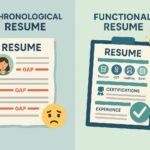
Chronological resumes don’t work when your timeline has gaps. What worked for me? A functional format that highlights skills before dates.
Here’s what my structure looked like:
- Core Skills: GST filing, Tax Planning, Excel Reports, Client Handling
- Courses Completed During Break: GST Refresher – ICAI, Tally ERP Workshop
- Work Experience: Only that experience which is acquired after skills & learning
This shift made recruiters focus on what I can do — not when I last worked.
✅ Your Action Step:
Download a functional resume template. Fill in your top 4-5 skills before listing past jobs.
3. Add a “Skills Gained During Career Break” Section
 Yes — that year you ran the home budget or freelanced for your cousin’s startup? It counts.
Here’s what I added:
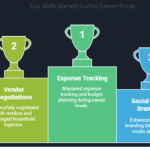
Skills Gained During Career Break
- Expense tracking & budget planning
- Vendor negotiations & household logistics
- Social media for personal branding
- Online course completion & certification
These aren’t fluff. These are skills. You earned them.
✅ Your Action Step:
Jot down 3-5 tasks you consistently handled during your break. Now, label them as professional skills.
4. Keep It Snappy, Sharp, and Short
Nobody’s reading a five-page life story. My winning resume was one page — two at most.
- Bullet points over paragraphs
- Simple words over jargon
- One line per achievement
✅ Your Action Step:
Trim. Cut fluff. Keep only what helps tell the story: “I have value. I’m ready.”
5. Keywords Are Queen
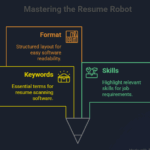
Here’s what no one told me: Recruiters often don’t read your resume — software does. So, I learned to speak robot (a little).
Include words like:
- Tally ERP 9
- GST filing
- Income Tax Return
- Reconciliation
- Audit documentation
- Microsoft Excel/ Power BI, Tableau
- MIS Reports
- CMA Data Preparation
- Banking and Finance correspondence
Put them in skill sections, course titles, and bullet points. That’s how you pass the first filter.
✅ Your Action Step:
Search job posts in your field. Grab 5-10 recurring phrases. Fit them into your resume naturally.
6. Start With a Comeback Summary
My favorite part of my resume is the 3-line story right at the top — it’s confident, clear, and current.
Here’s mine:
Qualified CA with 7+ years of experience in Audit and Taxation. Recently upskilled in GST reforms and Tally ERP through ICAI courses. Eager to return with refreshed energy and real-world perspective.
It sets the tone. It says: “Yes, I paused. And now I’m back — better.”
✅ Your Action Step:
Write a 2–3 line “elevator pitch” that captures your comeback journey and value.
7. Sync With LinkedIn — And Be Seen
 After updating my resume, I ignored LinkedIn for weeks. Then I realized — recruiters live there.
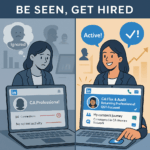
Here’s what I did:
- Updated my headline to: “CA | Tax & Audit | Returning Professional | GST-Focused”
- Shared a post about my comeback journey
- Joined CA groups and commented on others’ posts
Guess what? I got two interview calls from LinkedIn alone.
✅ Your Action Step:
Update your LinkedIn today. Even if you’re not job-hunting yet — let people know you’re back.
Bonus Real-Life Tip: Don’t Do It Alone
 Before I sent out my resume, I asked a friend to review it. She pointed out a missing date, suggested a stronger summary, and even helped reword a few lines.
Those changes? Made all the difference.
✅ Your Action Step:
Send your resume to one trusted friend, mentor, or coach for feedback. It’s worth it.
Here’s Your Quick Checklist:
| ✅ Task | 🎯 Done |
|---|---|
| Write an honest but empowering gap explanation | |
| Use a skills-first resume format | |
| Highlight real-world skills from your break | |
| Keep it under 2 pages | |
| Add keywords from job listings | |
| Write a strong comeback summary | |
| Update your LinkedIn profile | |
| Get feedback before applying |
Want More Support?
If you’re ready to go deeper — into interviews, confidence, and job-search hacks — join our Comeback Refresher Course. It’s built for women like us. Women who pressed pause, but never lost their power.
👉 Check out the full details here → [Link to course]
Final Thought: You Are Not Behind
That break you took? It wasn’t a waste. It made you stronger, wiser, more capable.
Your resume doesn’t need to hide your story. It needs to own it. And you? You’re already one brave step ahead just by being here.
Let’s go, sister. The next chapter is waiting — and you’re more than ready.

